

I bought the Amazon Basics 12-Sheet Cross-Cut Shredder in March, right after a neighbor two doors down had mail stolen out of an unlocked box and someone opened a store card in her name. That was the push I needed to finally deal with the paper grocery bag of old lease agreements, inspection reports, and closing documents that had been sitting under my desk for the better part of a year. I run a small real estate practice out of a converted garage office, so client paperwork moves through my house constantly, and none of it belongs whole in a recycling bin. Three months and dozens of shredding sessions later, I want to give you the honest version of owning this machine, not the version that only shows how satisfying cross-cut confetti looks in a photo.
Most reviews of this Amazon Basics shredder read like they were written after one enthusiastic afternoon of testing. Mine isn't. I've run it often enough now to know exactly where the Amazon Basics shredder earns the spot it takes up on my office floor and exactly where nobody warns you it'll test your patience, the parts that don't make it into a five-star headline but matter once you're the one standing over it at nine at night trying to clear a stack before a closing the next morning.
The Quick Verdict
A genuinely capable cross-cut shredder for real home office paperwork, but the cooldown pace, the plastic build, and the missing auto-reverse button are worth knowing before you buy, not after.
Amazon Check Today's Price →Before You Add Another 'I'll Deal With That Later' Pile
A grocery bag of old statements and client paperwork doesn't get less risky the longer it sits on your office floor. Here's the shredder that finally got mine handled, including the parts nobody mentions in the reviews.
Amazon Check Today's Price on Amazon →What Made Me Actually Buy This, and What Nobody Warns You About
I spent a weekend comparing shredders the way I compare listing photos, too long, too many tabs open. This one kept coming up because of the sheer number of ratings behind it, over seventy-six thousand at the time, averaging 4.3 stars, and because the 12-sheet capacity meant I wouldn't be feeding pages through one at a time. I ordered it mostly on the strength of that review volume, figuring a machine with that much real-world use behind it couldn't be hiding anything too serious.
Here's the part nobody mentioned before I owned one. It's louder than the word 'moderate' suggests the first time you run it, especially in a converted garage where sound bounces off concrete instead of getting absorbed by carpet and drywall the way it might in a carpeted spare bedroom. It also needs a real cooldown period after a few minutes of continuous feeding, and if you're picturing clearing a year of backlog in one sitting the way I was that first weekend, you'll be stopping and starting more than you expect.
My first jam happened four days in, a stapled closing packet with a paper clip I forgot to pull off the top sheet. It didn't damage anything, but it took a genuinely annoying five minutes of gently working the sheets back out by hand because there's no reverse button to do it for you. Nobody mentions that in the glowing five-star write-ups, and it's exactly the kind of detail that would have changed how I planned my first big shredding session if I'd known going in.
What '12 Sheets' Actually Means Once You're Using It Weekly
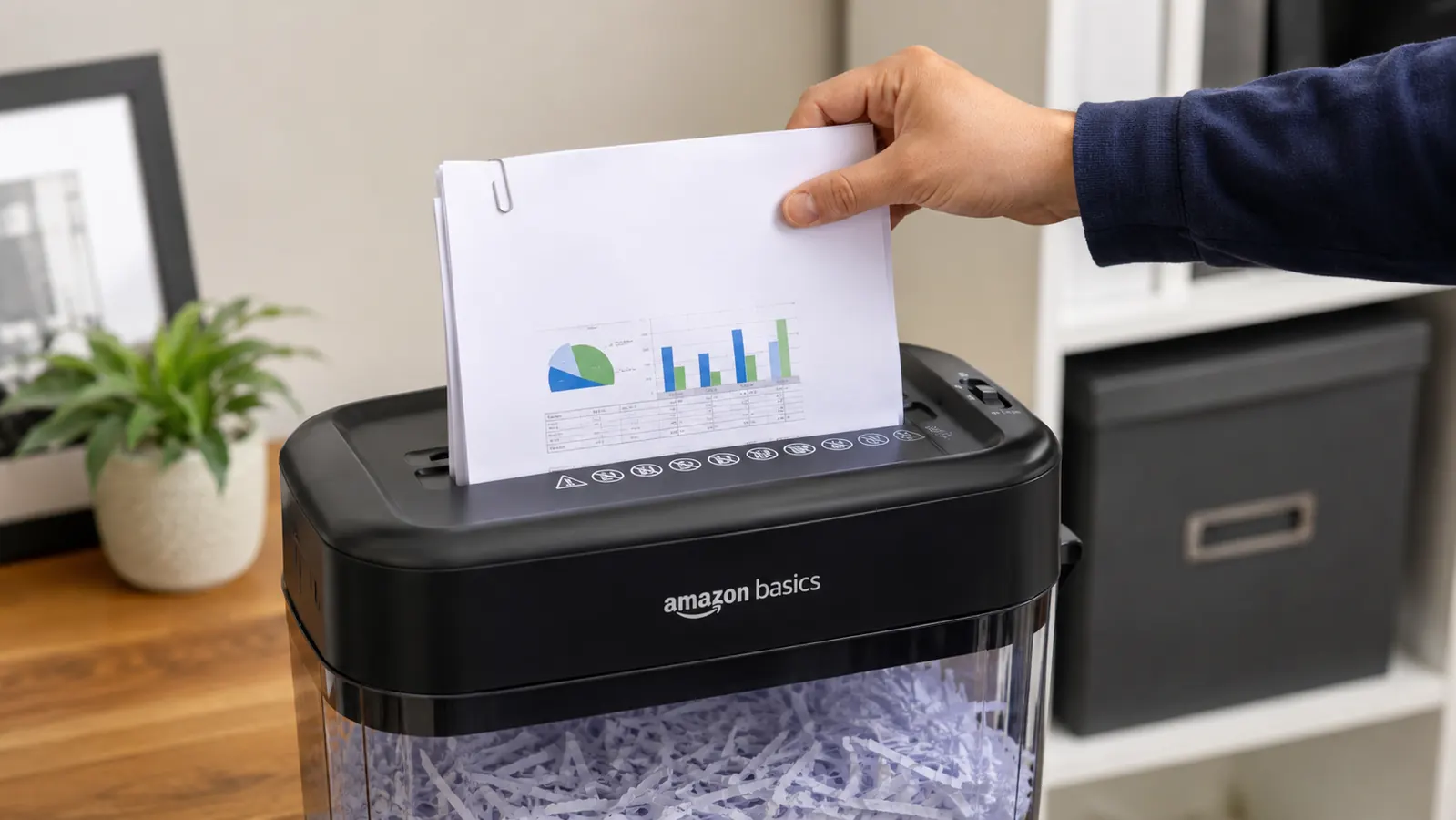
The 12-sheet rating holds up for standard copy paper, and I can genuinely feed ten to twelve sheets through at once before the motor sounds strained. Where the marketing gets a little generous is with anything heavier, glossy inspection report covers or thicker cardstock closing folders bring that number down closer to eight before I notice the machine working harder than I'd like.
The credit card slot on top works exactly as advertised, and I've used it for a handful of expired cards and one old driver's license without a hitch. What nobody tells you is that it's a separate mechanism from the paper feed, so you can't just toss a card in with a stack of documents. You have to stop, feed the card through its own slot, then go back to paper, which is a small extra step that adds up if you're clearing out an old wallet or a drawer of expired IDs alongside a paperwork purge.
The overheat protection is real, and it's also the single most misunderstood feature based on the complaints I've read in other reviews. It's not a defect when the amber light comes on and the motor pauses, it's the machine protecting itself, and it happens sooner than you'd think, usually after two to three minutes of steady feeding. The reviewers calling this a broken shredder because it 'randomly stops' almost certainly just hit that limit and didn't wait out the cooldown before deciding something was wrong.
The Parts Nobody Mentions: Noise, Plastic, and the Cooldown Rhythm
On noise, I'd put it somewhere between a vacuum and a kitchen blender, loud enough that I don't run it during a client call and loud enough that my husband asked what I was doing the first time he heard it from the next room. It's not disruptive if you time it between calls, but if your home office shares a wall with a nursery or a home gym someone's using for a workout video, that's worth factoring in before you buy, because nobody puts decibel numbers on the product listing.
The housing itself feels a bit more plastic than I expected for what it costs. It's not flimsy exactly, and nothing has cracked or felt loose after three months, but if you tap the top panel it has a slightly hollow sound that made me double-check the listing photos to see if I'd missed something about the build. It hasn't affected performance at all, but if you're expecting something that feels as substantial as an office-supply-store commercial model, temper that expectation now rather than being surprised at unboxing.
The cooldown rhythm is the thing you actually have to adjust to, and once I did, it stopped being annoying. I now feed in batches of eight to ten sheets, take a two-minute break to sort the next stack, and repeat. Fighting that rhythm by trying to force more sheets through faster is exactly how I ended up with my first jam. Working with it instead of against it is the single biggest thing I wish someone had told me before I sat down for that first big session.
Three Months of Jams, Bin Empties, and Everyday Wear
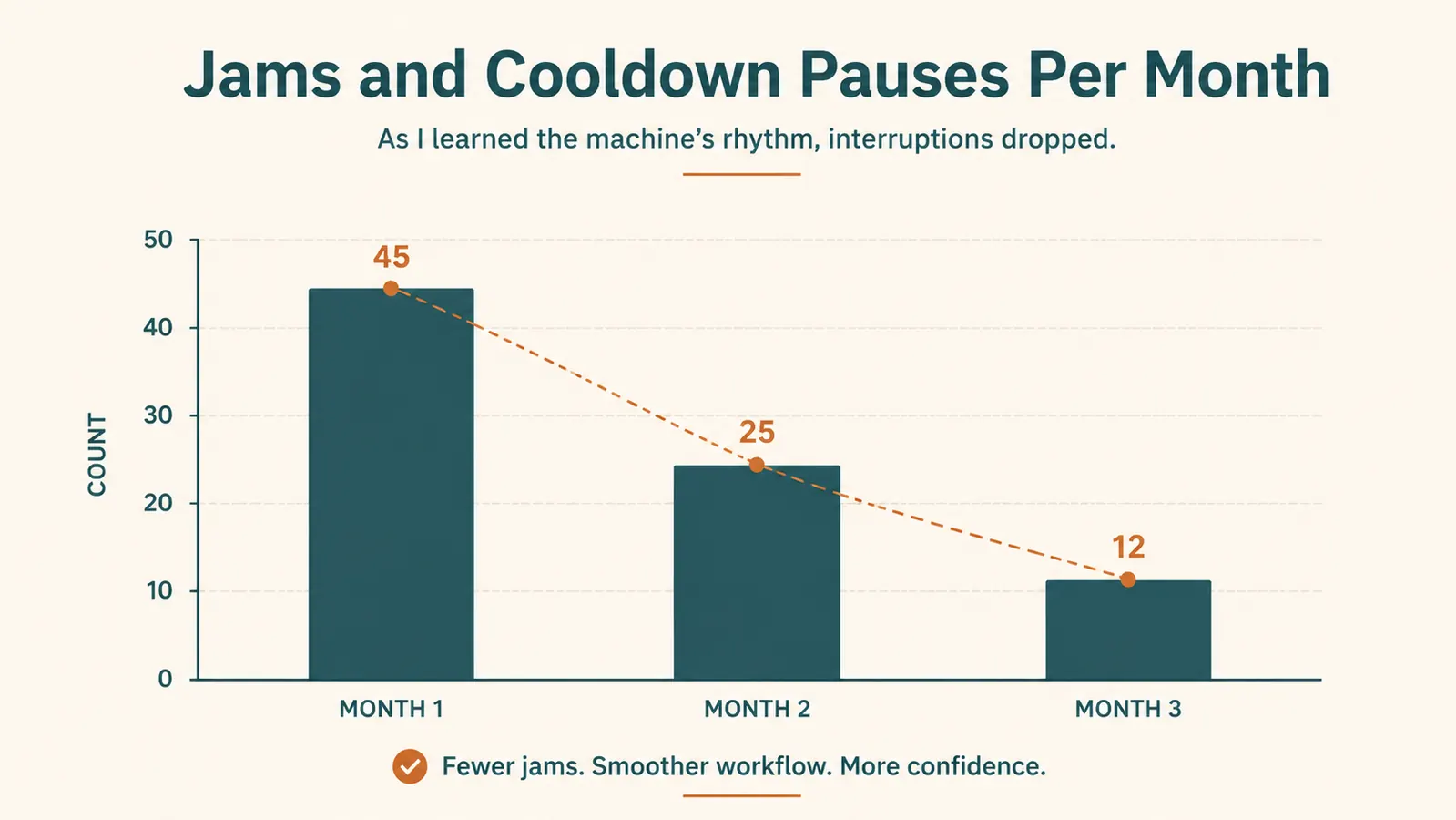
I've counted four real jams in three months, and every one of them traced back to something I fed it that I shouldn't have, a forgotten paper clip, a folded corner, a stapled packet I didn't straighten first. None required tools to clear, just patience and the willingness to gently pull paper back out by hand since there's no auto-reverse button to do it for you. By month three, jams had dropped off almost entirely, mostly because I'd learned to actually look at what I was feeding it instead of grabbing handfuls on autopilot.
The pull-out bin holds a solid amount of shredded paper, and at my pace it needs emptying roughly once a week. One thing nobody mentions is the static cling. Cross-cut confetti clings to sleeves, socks, and the inside of the bin itself in a way that whole-sheet shredders never bothered me with, and I've more than once carried a few stray pieces into another room stuck to my forearm without noticing until later.
Maintenance-wise, I run a shredder oil sheet through it about once a month, which the manual recommends and which I skipped the first few weeks out of plain forgetfulness. When I finally did it after noticing the shred quality getting slightly less clean around week six, the difference was immediate, cleaner cuts and less strain on the motor. That's a five-minute task nobody talks about in reviews, and it clearly matters for how long the blades stay sharp.
What the One- and Two-Star Reviews Actually Complain About
Before I bought this shredder, I did what I always do with a big purchase and read a stack of the negative reviews first, since the five-star ones rarely tell you anything useful. The most common complaint was the machine 'overheating' or shutting off within minutes of use, which lines up with what I mentioned earlier about the cooldown limit. In almost every case I read closely, the reviewer had fed a huge stack through nonstop, exactly the mistake I nearly made myself that first weekend, and never mentioned waiting for the amber light to clear before trying again.
The second cluster of complaints centered on jams, usually tied to paper clips, staples, or folded corners that got fed through without checking first. That tracks with my own experience too. Every jam I've had in three months traces back to something I fed it carelessly, not a defect in the machine itself. It doesn't mean the complaints are wrong to raise, jams are genuinely annoying, but it does mean most of them are avoidable with a few extra seconds of sorting before you feed a stack through.
A smaller number of reviews mentioned the motor sounding weaker after six months or a year of use, which I can't personally confirm or deny at the three-month mark, but it's worth flagging honestly rather than pretending every long-term complaint is user error. If you're the type who runs a shredder daily rather than a few times a week, it's reasonable to expect the motor to show wear sooner than mine has, and I'd rather tell you that upfront than let a glowing three-month review set expectations for year two.

Where This Falls Short, Even Though I'd Still Recommend It
The cooldown limitation is the honest headline con. If you're hoping to sit down and shred several hundred sheets of a multi-year backlog in one uninterrupted afternoon, this machine will frustrate you with forced breaks every few minutes. It's built for a steady weekly habit, not a single marathon purge, and buying it expecting the latter is setting yourself up for disappointment that isn't really the shredder's fault so much as a mismatch with what it's designed to do.
The missing auto-reverse button is the second real gap. Higher-end office shredders let you clear a jam at the push of a button. This one asks you to gently work the paper back out by hand, which has never damaged the machine in my experience but does add a small annoyance every time it happens. And the bin, while decent, fills faster than you'd guess during a genuine one-time purge, which means budgeting for multiple empties if you're finally tackling years of backlog rather than a normal week's worth of mail.
What I Liked
- Genuinely handles 10 to 12 sheets of standard paper without jamming
- Overheat protection works exactly as intended once you understand the cooldown rhythm
- Credit card slot cleanly shreds cards and old IDs
- 76,000-plus ratings and a 4.3 average held up under real weekly use, not just a first impression
- Shred quality stayed consistent after three months with basic monthly maintenance
Where It Falls Short
- Louder than 'moderate' suggests, especially on hard flooring or in a garage office
- No auto-reverse button, so jams have to be cleared by hand
- Plastic housing feels a bit hollow for the price, even though nothing has actually failed
- Static cling on shredded confetti is more noticeable than with older strip-cut machines
- Not built for a single marathon purge of a multi-year paper backlog
The reviews that call this shredder perfect are just as unhelpful as the ones that call it garbage. It's neither. It's a solid machine with a rhythm you have to learn, and once you learn it, it just works.
Who This Is For
If you deal with a steady weekly stream of sensitive paperwork, client contracts, closing documents, old statements, and you're willing to work in short batches rather than one giant session, this shredder is worth buying. It's also a solid fit for a shared home office where more than one person needs to shred things without a tutorial, since the feed slot and card slot are both straightforward enough that my husband picked up the routine in about thirty seconds. It also makes sense if you'd rather learn a machine's honest limits upfront than get surprised by them later, since the people who seem happiest with this shredder online are the ones who adjusted their habits to its pace instead of expecting it to behave like a commercial unit three times the size.
Who Should Skip It
If your real goal is clearing several hundred sheets of a multi-year backlog in one uninterrupted afternoon, the cooldown pauses will wear on you, and a commercial-grade shredder built for continuous heavy use is the better investment. And if your home office is genuinely soundproofed-thin, sharing a wall with a nursery or a room where someone regularly takes calls, it's worth testing the noise tolerance in your specific space before committing, since 'moderate' undersells it a little in a hard-surfaced room. If you shred so rarely that a jam or a cooldown pause would feel like a dealbreaker rather than a minor inconvenience, a smaller occasional-use model, or even an office supply store's shredding service a few times a year, might genuinely serve you better than owning a machine built for weekly volume.
Now You Know the Parts Nobody Mentions
Three months in, jams and all, this is still the shredder running in my office every week. See today's price on Amazon and decide if the rhythm works for your paperwork pile.
Amazon Check Today's Price on Amazon →